
 By
By 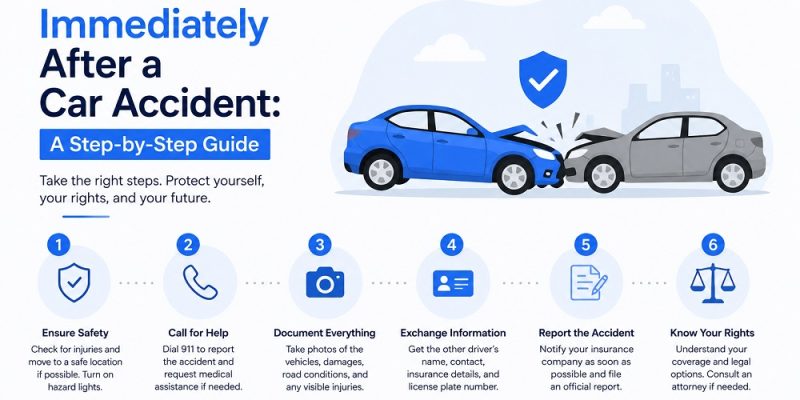
Being involved in a car accident can be frightening, stressful, and overwhelming. Whether it is a minor fender bender or a more serious collision, knowing what to do immediately after a car accident can help protect your safety, your rights, your insurance claim, and your vehicle.
Many drivers panic after an accident and make mistakes that can create problems later with insurance companies, medical claims, or collision repairs. Having a clear step-by-step plan can make the situation easier to manage and help you stay calm during a difficult moment.
This guide explains exactly what to do after a car accident and how to handle the situation properly from the scene of the crash to the collision repair process.
Step 1: Check for Injuries and Prioritize Safety
The first and most important step after a car accident is checking for injuries. Your safety and the safety of others should always come first.
Immediately after the collision:
- Stay calm
- Check yourself for injuries
- Check passengers for injuries
- Call 911 if anyone is hurt
- Avoid sudden movements if you feel pain
Even if injuries seem minor, it is still important to seek medical attention. Some injuries, including whiplash and internal injuries, may not appear immediately after the accident.
Step 2: Move to a Safe Location if Possible
If the accident is minor and the vehicles are drivable, move your vehicle to a safe area away from traffic if it is safe to do so.
This may include:
- The shoulder of the road
- A nearby parking lot
- A side street
- An emergency lane
Moving the vehicles can help prevent additional accidents and improve safety for everyone involved.
If the vehicles cannot be moved safely, remain inside the vehicle if necessary and wait for emergency responders.
Step 3: Call the Police
In many situations, contacting law enforcement is important after an accident.
A police report can help:
- Document the accident
- Support insurance claims
- Determine fault
- Protect against false claims
- Provide official records
When speaking with the police:
- Stick to the facts
- Be honest and accurate
- Avoid guessing
- Do not admit fault
Even if the accident seems minor, having an official report may become valuable later.
Step 4: Exchange Information
After ensuring safety, exchange information with the other driver.
Important information includes:
- Full name
- Phone number
- Address
- Driver’s license number
- Insurance company
- Insurance policy number
- Vehicle make and model
- License plate number
Remain calm and professional during the interaction.
Avoid arguments or discussing fault at the scene.
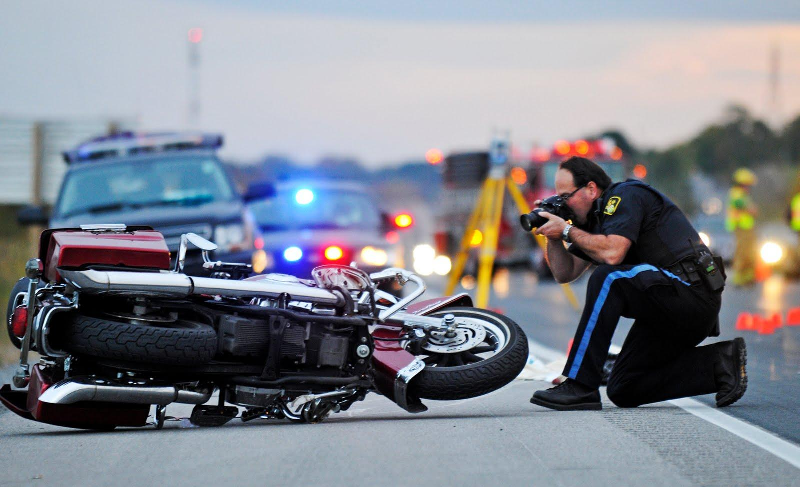
Step 5: Document the Accident Scene
Proper documentation can make a major difference when dealing with insurance companies and collision repair estimates.
Use your phone to take clear photos of:
- Vehicle damage
- License plates
- The overall accident scene
- Road conditions
- Traffic signs
- Tire marks
- Debris
- Weather conditions
Also consider recording:
- Time of the accident
- Date
- Location
- Witness information
- Police officer names and badge numbers
Detailed documentation helps protect you if disputes arise later.
Step 6: Speak Carefully at the Scene
After a car accident, emotions can run high. However, it is important to avoid making statements that may be misunderstood later.
Avoid saying:
- “It was my fault”
- “I’m sorry”
- “I didn’t see you”
Even polite comments may later be interpreted as admissions of fault.
Instead:
- Stay respectful
- Focus on safety
- Cooperate with authorities
- Let the insurance companies investigate
Step 7: Notify Your Insurance Company
Contact your insurance provider as soon as possible after the accident.
Most insurance companies will ask for:
- Accident details
- Police report information
- Photos
- Driver information
- Damage descriptions
Be accurate and honest when providing information.
Prompt reporting helps speed up the claims process and reduces delays.
Step 8: Seek Medical Evaluation
Even if you feel fine after the accident, getting evaluated by a medical professional is often recommended.
Some injuries may appear hours or days later, including:
- Whiplash
- Concussions
- Neck pain
- Back injuries
- Soft tissue damage
- Internal injuries
Medical documentation may also become important if injuries worsen over time.
Step 9: Choose a Trusted Collision Repair Shop
Once the insurance process begins, selecting the right auto body shop collision repair shop becomes one of the most important decisions.
A professional collision repair center can help:
- Restore your vehicle properly
- Work with insurance companies
- Identify hidden damage
- Perform structural repairs
- Match paint accurately
- Recalibrate safety systems
When choosing a collision repair shop, look for:
- Certified technicians
- Positive reviews
- Warranty coverage
- Modern repair equipment
- Insurance claim experience
Do not feel pressured to use a repair shop recommended by the insurance company if you prefer another trusted facility.
Step 10: Understand Hidden Damage Risks
After an accident, visible damage is not always the full story.
Modern vehicles may experience hidden damage involving:
- Frame alignment
- Suspension systems
- Sensors and cameras
- Airbag systems
- Electrical systems
A professional inspection is essential to identify all necessary repairs.
Ignoring hidden damage may create safety risks and long-term performance issues.
Step 11: Request a Detailed Repair Estimate
Before repairs begin at the auto body shop, ask for a detailed written estimate outlining:
- Parts needed
- Labor costs
- Paint work
- Repair procedures
- Estimated completion time
A transparent estimate helps you understand the repair process and avoid surprises later.
Step 12: Keep Records of Everything
Organized documentation is important after an accident.
Keep copies of:
- Police reports
- Insurance correspondence
- Medical records
- Repair estimates
- Rental car receipts
- Tow invoices
- Repair invoices
- Photos
Good recordkeeping can help protect you if disputes arise during the claims process.
Common Mistakes to Avoid After a Car Accident
Many drivers unintentionally make mistakes after an accident that can create problems later.
Avoid these common mistakes:
Leaving the Scene Too Quickly
Always remain at the scene until it is appropriate to leave and all necessary information has been exchanged.
Failing to Call the Police
A police report can provide valuable protection and documentation.
Forgetting to Take Photos
Accident scene photos can become critical evidence during insurance disputes.
Delaying Medical Attention
Even minor symptoms should be evaluated after a collision.
Choosing the Cheapest Repair Option
Low-cost repairs may lead to poor workmanship, safety concerns, and additional expenses later.
Why Professional Collision Repair Matters
Today’s vehicles are more advanced than ever before. Proper collision repair requires specialized equipment, manufacturer procedures, and trained technicians.
Professional repairs help restore:
- Structural integrity
- Vehicle safety
- Airbag functionality
- Paint finish
- Alignment
- Driver assistance systems
Poor repairs can affect both safety and resale value.
Signs Your Vehicle May Have Hidden Damage
After an accident, watch for signs such as:
- Steering pulling to one side
- Uneven tire wear
- Warning lights
- Vibrations while driving
- Strange noises
- Misaligned panels
- Water leaks
- Difficulty opening doors or trunk
These symptoms may indicate underlying damage that requires professional inspection.
Final Thoughts
Knowing what to do immediately after a car accident can help protect your safety, simplify the insurance process, and reduce unnecessary stress. Staying calm, documenting the scene, seeking medical attention, and choosing a trusted collision repair shop are all important steps after a crash.
Even minor accidents can lead to hidden damage or delayed injuries, which is why proper inspections and professional repairs are essential.
If your vehicle has been involved in an accident, working with an experienced collision repair center can help restore your vehicle safely and correctly while giving you peace of mind throughout the repair process.
Frequently Asked Questions
Should I call the police after a minor accident?
Yes. Even minor accidents may benefit from a police report for insurance and legal documentation purposes.
Can I choose my own collision repair shop?
In most cases, yes. You generally have the right to select the repair facility you trust.
How soon should I contact my insurance company after an accident?
You should notify your insurance provider as soon as possible after the accident.
What if I feel fine after the accident?
Some injuries may not appear immediately. It is still recommended to seek medical evaluation after a collision.
Why is professional collision repair important?
Professional repairs help restore your vehicle’s structural integrity, safety systems, and overall performance after an accident.




Comments